

“The Spanish Habsburgs (1500-1700): The Men and the Women who Ruled the First Global Empire”
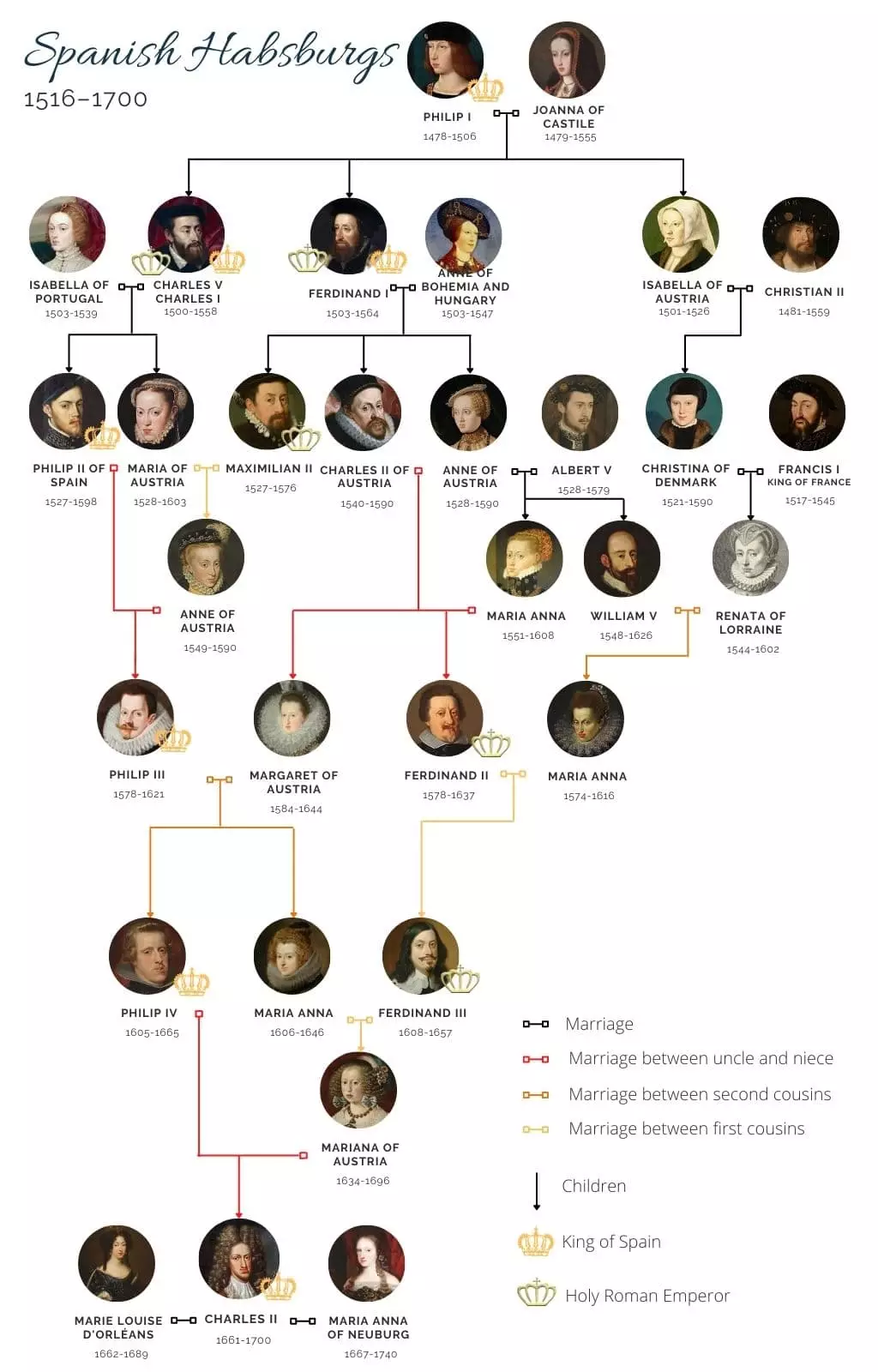
Within a little over a decade in the early sixteenth century (1506–1519), the man known by his imperial title, Emperor Charles V (b. 1500), inherited an unprecedented collection of territories from four different dynastic lines that were gradually united under the Habsburg name. A carefully negotiated settlement in 1556 split the dynasty into two branches. The Spanish Habsburgs retained senior status over their Austrian relatives as well as the bulk of the territories and a nascent empire in the New World, which they continued to expand. When they annexed the Kingdom of Portugal into their conglomerate in 1580, they became rulers of the first global empire in which the sun literally never set. At its peak, the Spanish Monarchy included the Iberian Peninsula, southern Italy, the duchy of Milan, the Low Countries, enclaves in North Africa, Central and South America, the Caribbean islands, the Philippines, as well as ports in Africa, Southeast Asia, and the Indian subcontinent. Although they experienced some territorial losses (such as Portugal in 1640), they retained most of the Spanish Monarchy’s European and transoceanic territories and enjoyed the loyalty of their culturally diverse subjects. So deeply associated were the Habsburgs with the Spanish political system that when King Charles II—the last Habsburg ruler of Spain—died in 1700 without direct descendants, it provoked a pan-European conflict and a civil war over which dynasty would succeed them.
How did the Spanish Habsburgs build and maintain this unprecedented global empire?
This book examines the political, cultural, and familial strategies of the premier dynasty of early modern Europe. Dynasticism and geopolitics explain their decision to defend dynastic interests against foreign enemies even if it meant mortgaging income years in advance. The administrative structure of the monarchy grew into a sophisticated and elaborate system capable of extracting resources and maintaining hegemony on the European and global stages. Their religious identity—or Pietas Austriaca—as defenders of Catholicism became an integral aspect of Habsburg rulership and enmeshed the dynasty in countless wars. Cultural strategies were just as critical: the Habsburgs collected and patronized the arts on a massive scale, supported religious institutions, and built urban and architectural landmarks, gradually creating a wildly effective Habsburg “brand.”
Drawing on her expertise, archival research, and a large body of revisionist scholarship, Silvia Z. Mitchell tells their history as a collective enterprise. Mothers, sons, aunts, daughters, siblings, cousins, and nephews dedicated their political talent, military skills, and diplomatic connections to the advancement of dynastic ambition. Habsburg women were especially important to the success of the dynasty: they governed territories, exercised regencies, negotiated alliances, defended and passed on inheritance rights, and connected multiple centers of power. By focusing on how the dynasty sustained and adapted strategies across generations, the book challenges interpretations that measure the Habsburgs principally against a presumed trajectory of decline.
The result is a history of dynastic power on a global scale that shows how one ruling house helped transform the early modern world.

Diego Rodríguez de Silva y Velázquez, Infanta María Teresa (1638-1683), hacia 1652-1653. Copyright © Kunsthistorisches Museum, Vienna.
“Marie Thérèse of Austria: Infante of Spain, Queen of France”
Written with Jonathan Spangler, this biography places Marie-Thérèse of Austria at the center of her own history. Born a Spanish infanta and married to Louis XIV, she connected two rival monarchies through family relationships, correspondence, and dynastic rights. The book explores her life between Spain and France and the political significance of a queen whose story has so often been overshadowed by her husband’s.